The scene: 06:45, a portakabin somewhere in England. A dozen operatives from four different subcontractors are sat in the cold, half of them checking their phones, all of them wanting to get moving.
The site manager talks through hazards, access routes and the task for the morning. It takes twenty minutes. Two of the operatives are on their first day. One has limited English. Everyone signs the sheet.
The gap between what was said and what's actually understood, is where so much site risk lives. It's also the gap that video is closing faster than any other training format construction has tried.
The training model construction inherited
For most (all?) of the industry's history, training has meant one of three things, learning from your peers, face to face in a 'classroom' or more recently paper and powerpoint. None of these were designed for a workforce that moves between sites every few weeks, speaks several different first languages, and needs to be working within the hour of arriving.
The cost of that mismatch is not abstract. On a busy site, induction administration alone can eat up 10 to 15 hours of a manager's week. Multiply that across a portfolio of live sites and the productivity loss is real before a single tool has been picked up. Worse, the standard slips depending on who's delivering, what kind of mood they're in and how much time they have that day. A thorough 20 minute induction at 7.30am can become a rushed five minute version by 2pm, on the same site, for the same risks. Often not delivered by the right person.
The Farmer Review called this out plainly back in 2016: modernise or die.¹
Nearly a decade on, training in construction is still too often generic, too long, and measured by attendance rather than whether anyone actually learned anything. A 2026 review into workforce competence, drawing on discussions across UK safety and health leaders,² reached the same conclusion: training that is not modular, contextual and task specific undermines competence, however well intentioned it is.
Construction has known its training model is broken for a long time. What's changed is that there is a system that fixes the parts of it that were fixable.
It is called LUMA1.
Why video works
The case for video isn't a marketing claim, it is decades of my own experience + cognitive science. I love to use my production skills to help others do their jobs better and safer. I found my passion on my first corporate video over 30 years ago. I know how video works.
Richard Mayer's Cognitive Theory of Multimedia Learning, shows that people process words and pictures through separate mental channels.³ Combine the two well and you reduce the effort it takes to understand something. Rely on text or speech alone and you make the brain do more work to get to the same place.
That theory is now backed by how people actually behave. Ofcom's own research shows UK adults spending well over four and a half hours online every day, and video, particularly short form video, has become the default way people take in information, not the exception.⁴ A workforce that grew up on YouTube rather than instruction manuals does not change its habits at the site gate. It wants video.
There is also a simpler, more practical reason video wins on a construction site. People like the easy answer and that's always a video over a read. A 90 second video that plays on the phone already in their pocket has a fighting chance of getting through.
Why it matters more in construction specifically
1. Language
The most recent large scale study of the UK construction workforce found that roughly one in ten workers were not born in the UK, rising to around four in ten in London's building trades.⁵ That data is now several years old, and whenever I've been on site in London, it is way more. See The Canteen Test
A 2020 systematic review of safety training for migrant construction workers, published in the Journal of Occupational Health Psychology,⁶ backs this up from the research side. It found audiovisual training materials genuinely help workers with limited host-country language ability, but only when the video is in a language the worker actually speaks and is paired with participation, not just passive watching. The reviewers were explicit that training built around passively delivered information does less than training that gets the worker doing, discussing, or demonstrating something back. That single finding does most of the work for the rest of this piece.
2. The law
Under CDM 2015, every worker on a site is the principal contractor's responsibility for health and safety purposes, whether they are directly employed, agency, or self-employed. If a briefing cannot be evidenced as understood, and not just delivered, the exposure sits with whoever is running the job.
This is not theoretical. Falco Construction runs over a hundred mobile teams across London and the South East, working in electrical, water and telecoms, in a workforce that speaks multiple languages.⁹ They converted their toolbox talks from Word documents into short, mobile-first video modules, translated and voiced in the languages their workforce actually speaks. When Falco competed for an expanded six-year framework agreement with UK Power Networks, their ability to prove workers had understood, not just received, safety-critical content was part of what set them apart.
“The LUMA1 platform enables us to communicate quickly and effectively with our geographically dispersed workforce, providing confidence that critical safety messages are not only received but clearly understood in a fully auditable manner. This consistency and demonstrable proof of understanding were significant differentiators that directly supported us in securing the most significant contract in Falco's history.”
Terry McHugh, Director of Health, Safety and Wellbeing
Deltera, managing nine active construction sites across Toronto, saw the same thing from a different angle.¹⁰ Safety orientation delivered in five languages did not just improve compliance numbers, it improved whether workers actually understood the hazards they were walking into. As their team put it, workers could engage with the material in the language they think in, not the language a system defaults to. Read the Deltera case study.
3. The workforce
The sheer pace of the workforce required to join the industry has been talked about a lot in other places, so I'm taking it as read you know - Construction needs a lot of new people each year.⁸ That's a genuine test for how it trains. Every one of those new starters needs to go from stranger to safely productive in days, not months, and the traditional classroom model was never built to onboard people at that rate.
The business case, not just the safety case
This is a commercial argument as well as a safety one. Construction's own sector-specific data, most recently reported for 2024/25, showed the industry accounting for 28% of all worker fatalities from a workforce that makes up around 6% of the total, with falls from height causing 36% of construction deaths.¹¹ Those numbers sit behind every insurance premium, every framework tender, and every board conversation about risk.
The return on fixing this is not marginal either. Research compiled from OSHA, HSE and industry safety bodies suggests every pound invested in an effective safety and readiness programme returns somewhere between four and six pounds in avoided delays, rework and incident liability, and that companies with strong safety performance tend to run meaningfully more profitably than those without.¹² None of that requires a leap of faith. It is the same logic that already governs how contractors price risk into every bid. Provable readiness is simply that logic applied to training, rather than left to a signature on a sheet. We've written about it here: The Cost of Unready Workers
The catch
Video is not the answer on its own. Any company with a smartphone can make a training video. That's not the hard part. The hard part is proving that the right person watched it, understood it, and can be shown to have understood it if a client, a regulator, or a coroner ever asks.
A well produced safety film sitting on a shared drive proves nothing on its own. It is a content asset, not evidence. The regulatory direction of travel makes that distinction sharper every year. The Building Safety Act 2022 is pushing the industry from broad policy compliance toward granular, evidenced competence. Under joint and several liability, a main contractor can be held liable for a subcontractor's failure regardless of fault, and the claimant will always go looking for whoever has the deepest pocket.¹³ In that environment, a folder of unwatched videos is not a defence. It may even be evidence of the opposite: that you knew what needed communicating and could not prove you did it.
Completion is not comprehension. A worker who has watched a video is not the same as a worker who has understood it. That distinction sounds obvious written down but it's routinely ignored in practice, because completion is easy to measure and comprehension is not. Unless the system is built to check it. The academic research on migrant worker training says the same thing from the opposite direction: passive video-watching, on its own, is a weaker training design than video paired with a genuine response from the worker, a question, a demonstration, a discussion.
The regulators are catching up to the same idea. Constructionline's guidance on the Building Safety Act notes that competence under the Act now extends beyond the old CDM 2015 definition, skills, knowledge and experience, to include behaviours (and culture).¹⁴ A dutyholder now has to demonstrate not just that someone was trained, but how they behave. A video can teach the first three. It cannot, by itself, evidence the fourth. That is the gap a readiness system has to close.
What good actually looks like
Video-based training earns its place in a workforce readiness system when it is short and task specific. When it is delivered in the language a worker actually thinks in, not the language assumed by whoever wrote the original PowerPoint. When it is paired with a genuine comprehension check, not a “mark as complete” button that anyone can click without watching. And when the record of who watched it, understood it and when, is timestamped and retrievable the moment someone asks for it, whether that is an auditor, a client, or an investigator after an incident.
It also depends on writing it properly. Video forces the discipline that most written procedures skip: one idea at a time, in the order a worker actually needs it. Just by thinking about the video, the correct process falls into place, logically. You can even just 'paint by numbers', take a few pictures and add a bit of voice. Simples!
That is the model LUMA1 was built around: taking the training content a contractor already has and turning it into short video modules in the languages a workforce actually speaks, then wrapping enforcement, comprehension checks and an audit trail around it. Not a video library. A readiness system that happens to use video as its primary language, because video is the format that actually reaches a modern, mobile, multilingual construction workforce.
Better training video is the headline. Provable readiness is the job.
If you are still running toolbox talks off a Word document and a signature sheet, the conversation worth having is not “should we make some videos.” It is “can we prove, for every worker, on every site, today, that they understood what they needed to before they picked up a tool.”
Cleared, or not cleared.
In practice
Four things contractors learned about putting video on site.
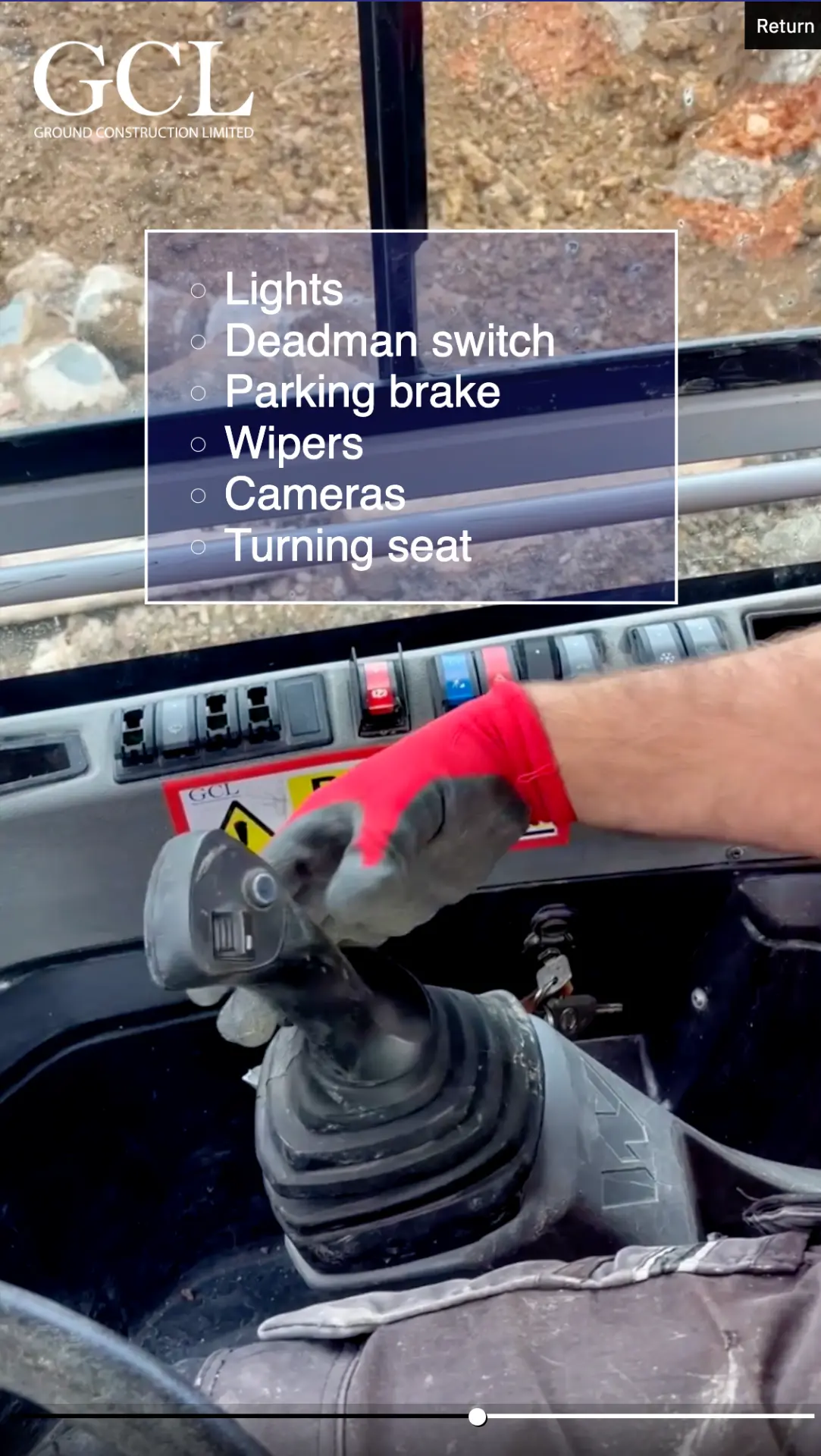
It's important to always cover the basics regularly.
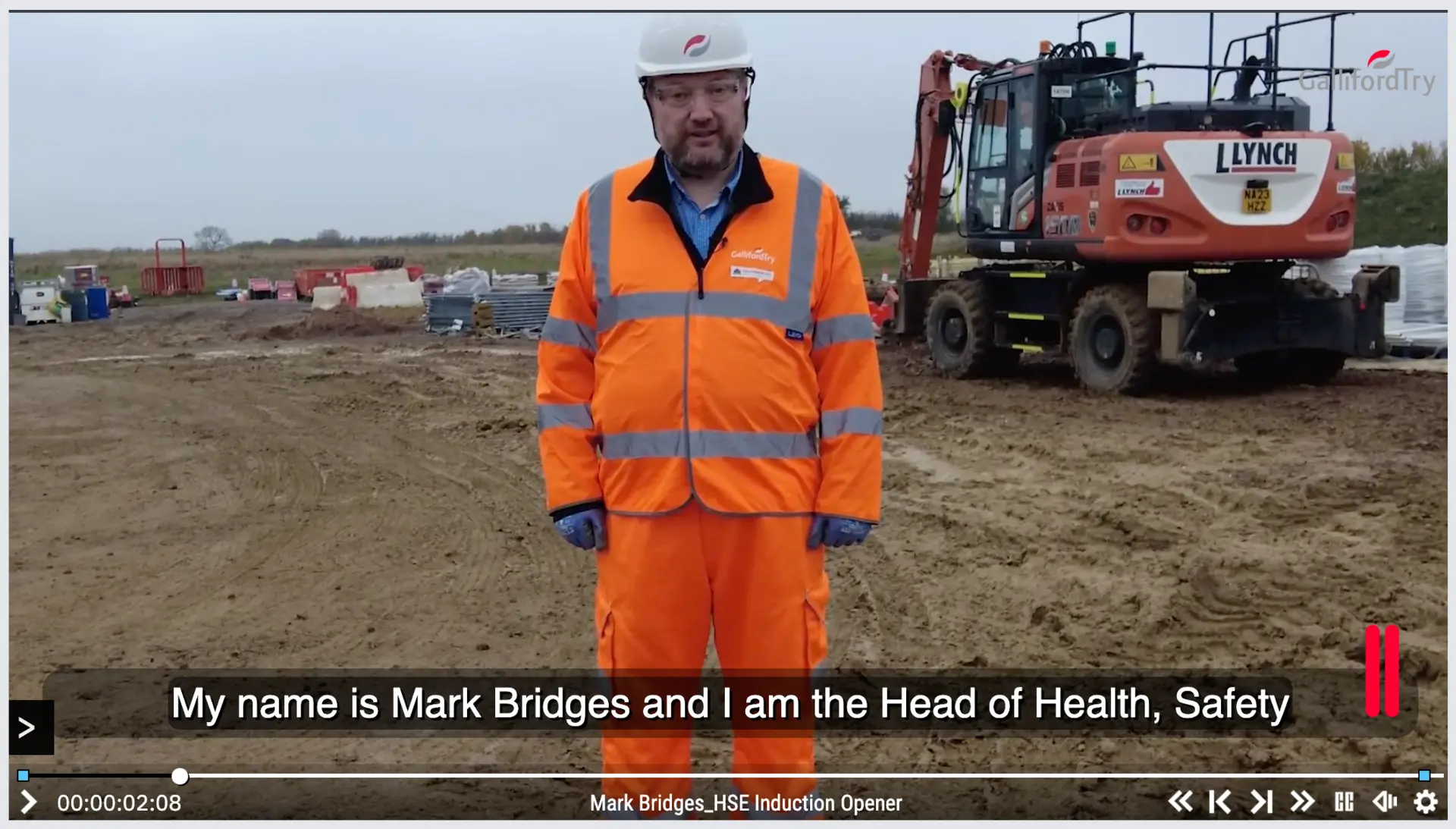
Authenticity beats polished production for Trust.
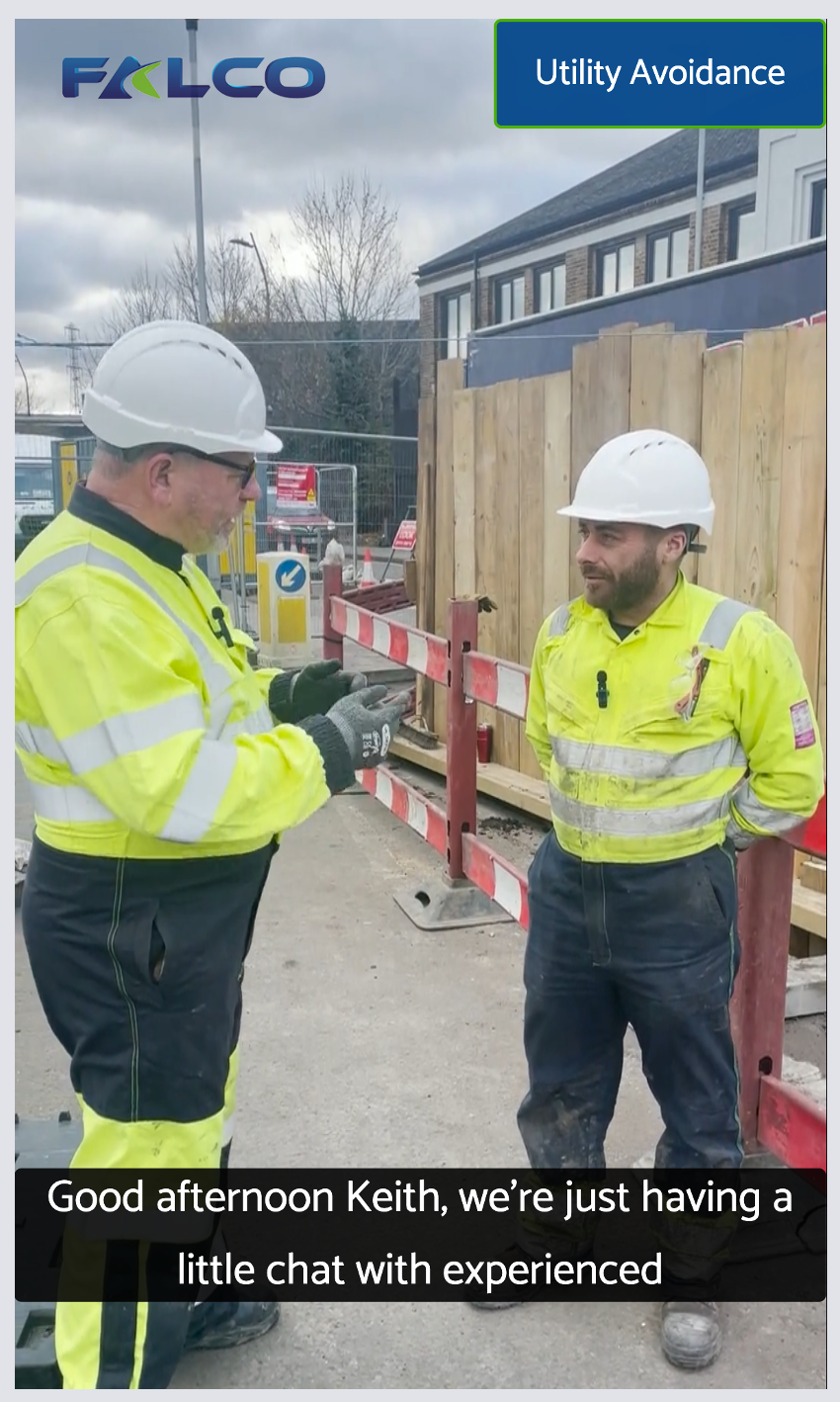
Make a point of Learning from the Best of your people.

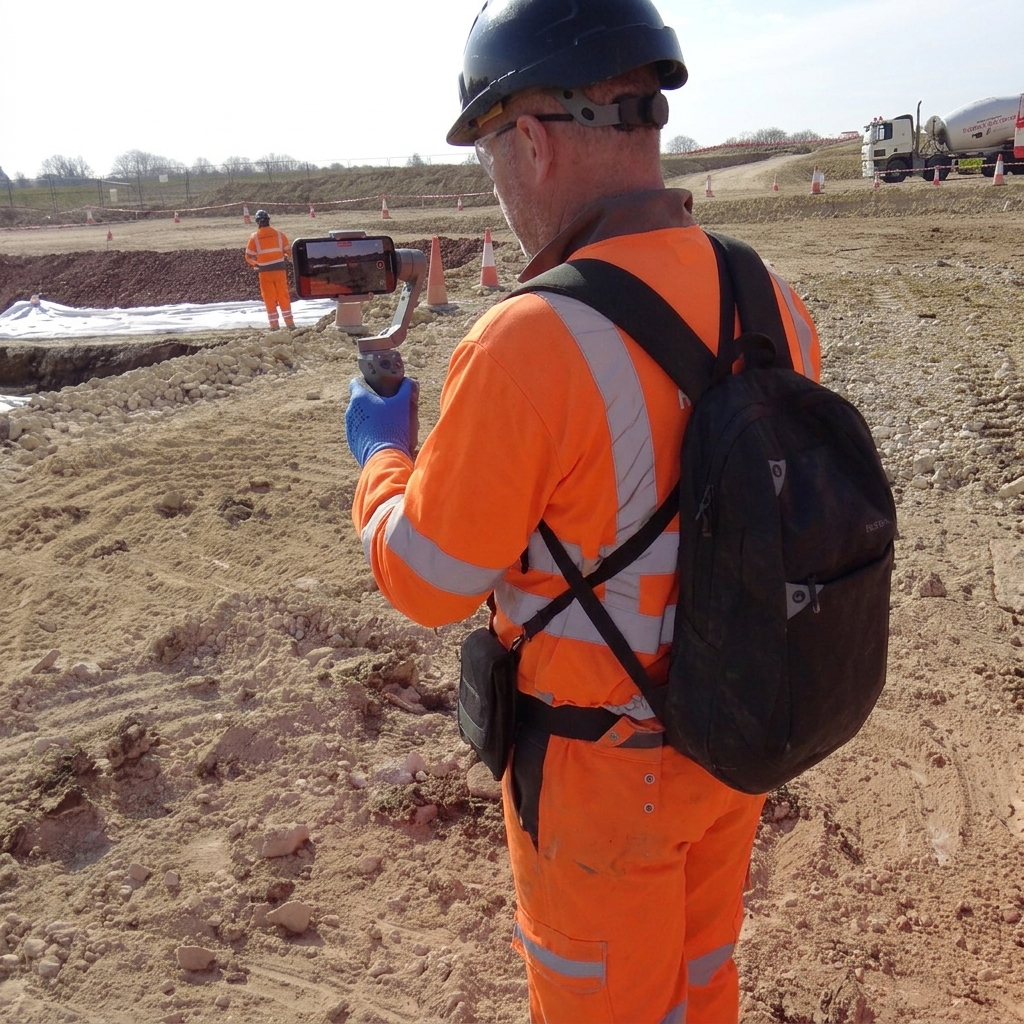
Video can easily be made without a camera today.
Notes and sources
1. The Farmer Review of the UK Construction Labour Model, “Modernise or Die,” Construction Leadership Council, 2016.
2. RoSPA's OSH Skills Commission, “Protecting Workforce Competence for Safer, Healthier Workplaces,” published June 2026 in partnership with Speedy Hire.
3. Richard Mayer, Cognitive Theory of Multimedia Learning. A well established framework in educational psychology, summarised in the Cambridge Handbook of Multimedia Learning (Cambridge University Press) and multiple academic overviews. I have not cited a specific retention percentage, as precise figures vary by study and context.
4. Ofcom, Adults' Media Use and Attitudes and Online Nation reporting on UK online and video consumption habits (ofcom.org.uk).
5. Office for National Statistics, “Migrant labour force within the UK's construction industry” (August 2018 release, based on 2011 Census and 2014–16 Annual Population Survey data). This is the most recent large scale published breakdown I could verify. It is several years old and, in my view, likely understates the current picture on major infrastructure programmes.
6. Peiró, J.M., Nielsen, K., Latorre, F., Shepherd, R. and Vignoli, M. (2020), systematic review of safety training for migrant construction workers, Journal of Occupational Health Psychology, 25(4), pp.275–295. Note the review covers only 18 peer-reviewed studies published 2000–2017, so treat it as indicative of a research direction rather than a large evidence base.
7. CITB, Construction Workforce Outlook 2026–2030 (citb.co.uk/cwo).
8. CITB, New Entrant Support Team update, 2025/26 financial year (citb.co.uk).
9. Falco Construction case study, LUMA1 client materials.
10. Deltera Construction Management case study, LUMA1 client materials.
11. HSE, workplace fatality, injury and ill-health statistics: headline 2025/26 figures (hse.gov.uk/statistics/overview.htm) for the all-industry totals, and 2024/25 sector data (as compiled in LUMA1's “The Cost of Unready Workers,” April 2026) for the construction-specific share. These two figures come from different reporting years, since HSE's overview page did not give a construction breakdown for 2025/26 at time of writing.
12. Safety-programme ROI research (OSHA, HSE and industry safety bodies), as compiled in LUMA1's “The Cost of Unready Workers,” April 2026. I would treat the “$4 to $6 return per $1 invested” figure as an industry-research estimate rather than a precise, independently audited number.
13. Building Safety Act 2022; CDM 2015; joint and several liability context, per LUMA1's internal financial and regulatory landscape briefing (2026).
14. Constructionline, Building Safety Act guidance (constructionline.co.uk), on the Act's extension of competence beyond CDM 2015's skills, knowledge and experience definition to include behaviour and culture.