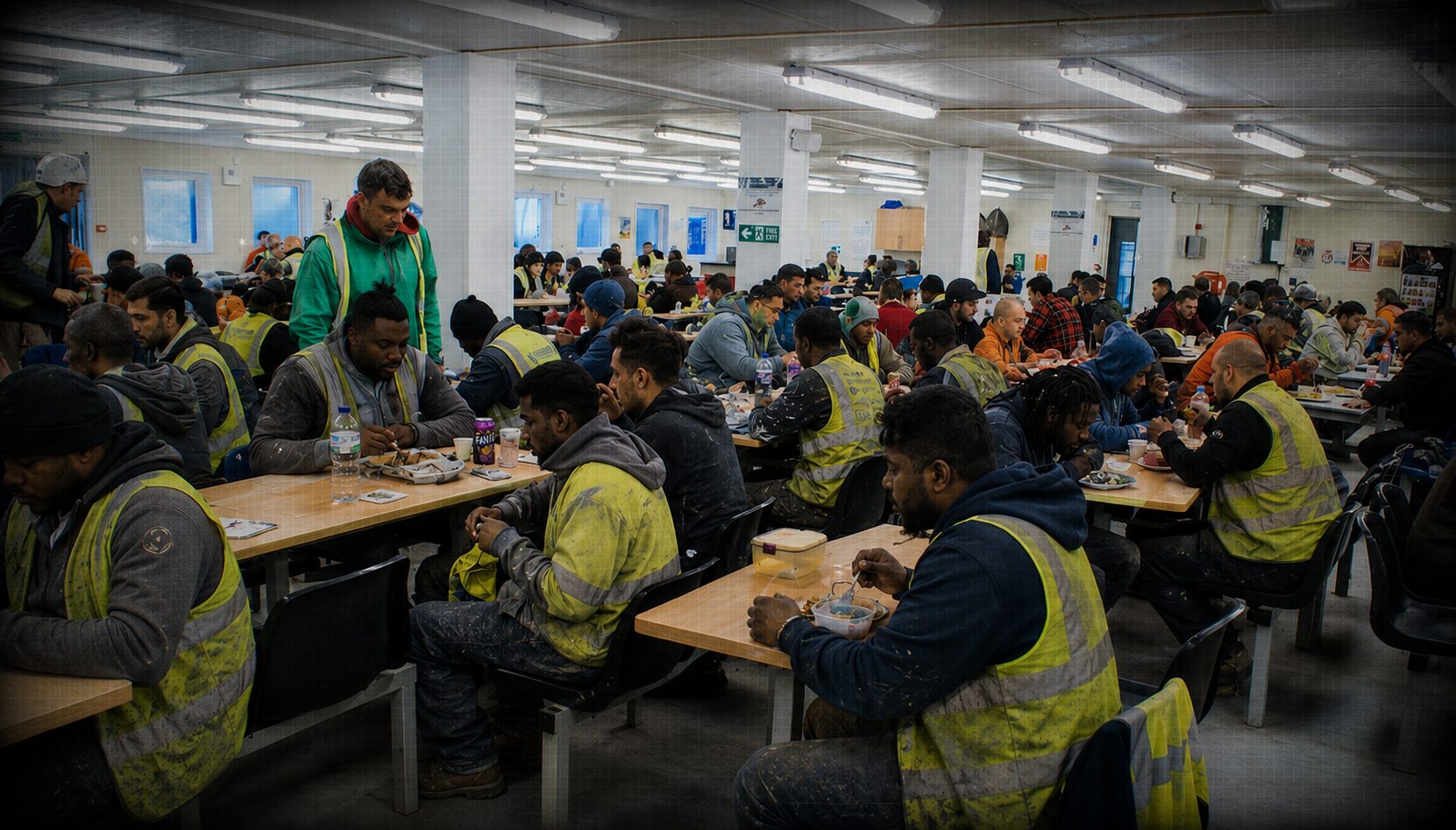
I was on site in London recently and my client asked if I fancied some lunch. The canteen was full. Crews from Punjab, Albania, Czechia and half a dozen other places, eating together, and the food matched the room. Even the vending machines were in Romanian.
This is what UK construction looks like now. Fifteen per cent of the UK construction workforce is non-UK born. In London, that figure reaches 54 per cent. On the site I visited, English was probably the third or fourth most spoken language in the room.
But the important question is 'How many of those workers were inducted in a language they actually understand?'
On most sites, the honest answer is almost none. The induction runs in English. The worker nods, signs the sheet, and walks out. The record says trained. The worker knows less than the record suggests. Signatures as a proxy for learning.
On this site, the answer was all of them.
What this site does differently
Every worker had a company induction and a site-specific induction in their own language. Not subtitles over an English video. Not a bilingual colleague relaying the gist. Spoken content in their first language, with a comprehension check at the end.
That alone puts this site ahead of most of the industry. But the part I found most impressive is what happens after induction.
The site manager films short procedures on her phone. Thirty to sixty seconds. She gets the expert to talk over the task while it happens. She does this for anything she knows will come up again, because the same questions repeat every time the subcontractors change. That clip goes into LUMA1, gets translated, and is available as a refresher for the next crew in whatever language they need.
Think about what that replaces. A toolbox talk delivered in English to a crew that half understood it. A laminated SOP nobody reads. A supervisor explaining the same task for the fortieth time through gestures.
One minute of phone footage. Every language on site. A record that each worker viewed it and understood it.
Why the canteen matters
The canteen and the inductions are the same decision, made twice.
This contractor worked out that if you want a multinational workforce to perform, you meet them where they are. Feed them food they recognise. Brief them in a language they understand. One is hospitality. The other is safety. Both say the same thing to the worker: we expected you, and we prepared for you.
Most contractors get this backwards. They treat the multilingual workforce as a complication to be managed rather than the workforce they actually have. Construction needs foreign labour to get the job done. That is not a debate. The only question is whether your site is set up for the workforce on it, or the workforce you wish you had.
The test
So here is the canteen test. Walk into your site canteen at lunchtime. Count the languages you hear.
Then walk to the site office and ask how many of those languages your induction is delivered in.
If the two numbers don't match, your training records are describing a site that doesn't exist.
We've written before about why English-only training doesn't work, why translated isn't the same as understood, and how culture shapes what workers hear. This site is what it looks like when you act on all three.
LUMA1
LUMA1 delivers inductions, briefings and SOPs in 80+ languages, with a timestamped record that each worker understood before they started.